
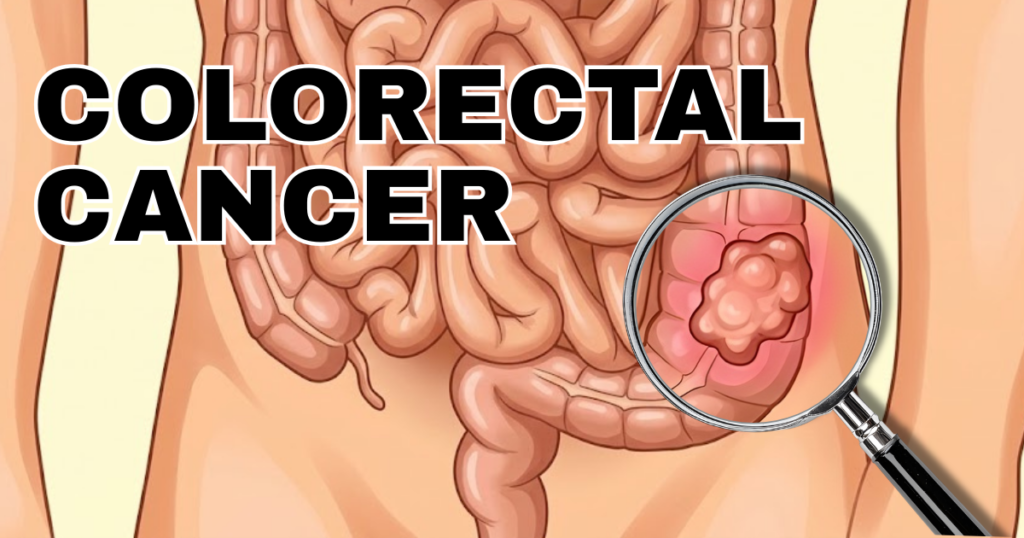
What is Colorectal Cancer?
Colorectal cancer is cancer that starts in the colon or rectum, which are parts of the large intestine. It often begins as a small growth called a polyp. Over time, some polyps can turn into cancer.
Colorectal cancer can develop silently for years, which is why screening is so important. Screening can find cancer early, and in some cases can prevent cancer by finding and removing certain polyps.
What causes colorectal cancer?
Colorectal cancer happens when cells in the colon or rectum begin to grow out of control. In many cases, abnormal cells develop from polyps. Not all polyps become cancer, but certain types can.
Inherited conditions cause some cases, while age, personal or family history, and lifestyle factors contribute to most others.
Common types
Most colorectal cancers are adenocarcinomas, which start in gland cells in the lining of the colon or rectum. Less common types include:
- Neuroendocrine tumors
- Lymphomas
- Sarcomas
A healthcare professional can explain what type is involved and how that affects treatment.
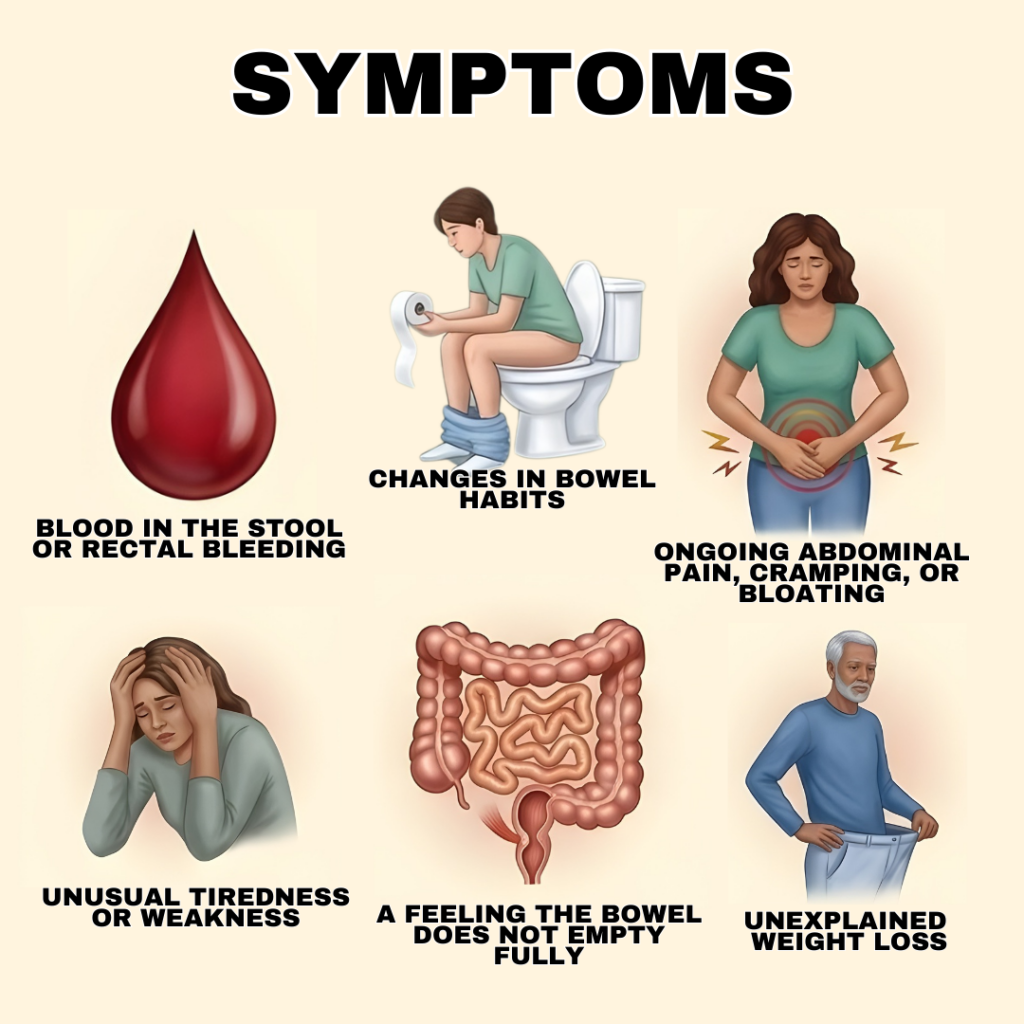
Symptoms to know
Early colorectal cancer may not cause symptoms. If symptoms occur and last more than a couple of weeks, seek medical advice. Symptoms can include:
- Blood in the stool or rectal bleeding
- Changes in bowel habits, such as diarrhea, constipation, or narrower stools
- Ongoing abdominal pain, cramping, or bloating
- A feeling the bowel does not empty fully
- Unexplained weight loss
- Unusual tiredness or weakness, which can be a sign of anemia (low red blood cells)
These symptoms do not always mean cancer, but they should be evaluated.
Risk factors
Risk factors are things that increase the chance of developing a disease. Having risk factors does not mean a person will develop colorectal cancer, but it can make screening more important.
Risk factors you cannot change:
- Age (risk increases after 45)
- Personal history of colorectal polyps or colorectal cancer
- Family history of colorectal cancer or advanced polyps
- Inflammatory bowel disease, including ulcerative colitis or Crohn’s disease
- Certain inherited syndromes (for example, Lynch syndrome)
Risk factors you may be able to change:
- Smoking
- Heavy alcohol use
- Limited physical activity
- Overweight or obesity
- Diets high in red meat and processed meats
If there is a strong family history of colorectal cancer, ask whether genetic counseling or earlier screening is appropriate.
Screening: prevention and early detection
Screening is one of the most important steps in colorectal cancer prevention. Some tests can find cancer early, and some tests can find and remove polyps before they become cancer.
Doctors recommend colorectal cancer screening at age 45 for adults at average risk. People with higher risk factors may need earlier or more frequent screening.
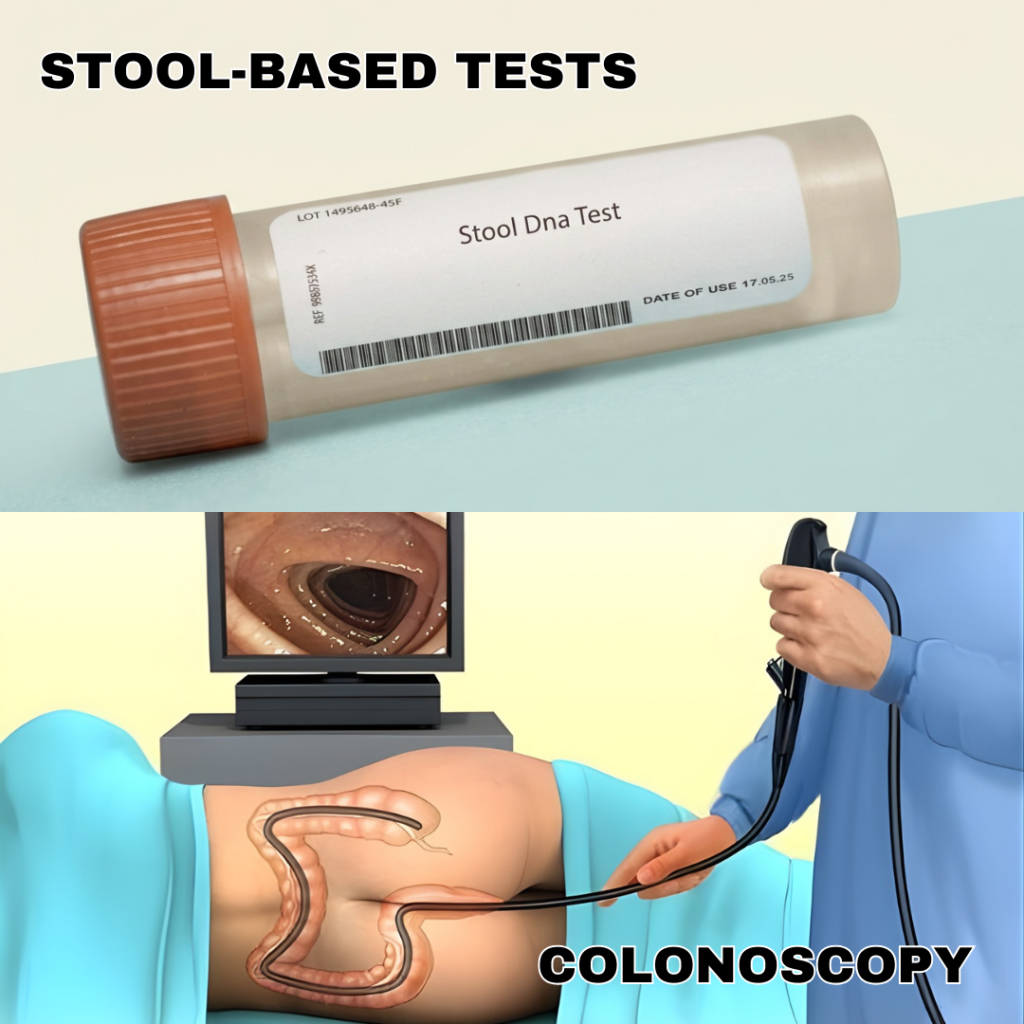
Common screening options include:
- Stool-based tests: Check for blood or abnormal DNA in the stool. These are done at home and repeated on a schedule.
- Colonoscopy: Uses a small camera to look inside the colon and rectum. Polyps can be removed during the procedure.
A healthcare professional can help choose the best option based on medical history, risk factors, and preferences.
How colorectal cancer is diagnosed
If a screening test is abnormal, or symptoms suggest colorectal cancer, the next step is often a colonoscopy. If an abnormal area is found, a tissue sample (a biopsy) may be taken and examined under a microscope.
Additional tests may be used to learn whether the cancer has spread and to guide treatment planning.
Treatment and management
Treatment depends on the location of the cancer, whether it has spread, and overall health. Treatment may include:
- Surgery
- Chemotherapy
- Radiation therapy (more common for rectal cancer)
- Targeted therapy or immunotherapy for certain cancers, based on tumor testing
Treatment plans are individualized. Care is often coordinated across a team that may include gastroenterology, surgery, oncology, and primary care.
When to seek care
Seek medical care promptly for:
- Rectal bleeding or black stools
- Persistent changes in bowel habits
- Unexplained weight loss
- Ongoing abdominal pain
If there is uncertainty about when to start screening, it is still worth having a screening conversation.
This content is for general educational purposes only and does not constitute medical advice. Please consult with your healthcare provider for personalized medical guidance.
Call 346-500-5342 to find out how we can help with colorectal cancer screening and digestive health care.