What is Stress?
Stress is the body’s natural response to pressure or demand. In short bursts, it can help you stay alert and motivated. When stress becomes frequent or constant, it can affect sleep, mood, blood pressure, blood sugar, and overall quality of life. Many adults report stress-related symptoms such as fatigue, sleep disruption, and anxiety, and chronic stress is commonly linked with long-term health risks.
Stress awareness is about noticing early signs, understanding common triggers, and using simple strategies to reduce the physical and emotional load before it starts to affect your health.
What Happens in the Body During Stress
When you perceive a threat or pressure, your brain signals the release hormones like adrenaline and cortisol. These hormones:
- Increase heart rate and blood pressure
- Raise blood sugar to provide quick energy
- Shift the body into “fight-or-flight” mode
- Reduce digestion and suppress immune function temporarily
This response can be helpful for short-term challenges. The problem is when the stress response stays “on” too often. Over time, repeated cortisol surges can contribute to inflammation, poor sleep, weight changes, and worsening of chronic conditions.
Types of Stress
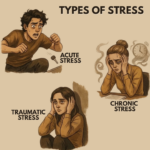
Not all stress is the same. Identifying the pattern can help you choose the best approach.
Acute stress is short-term related to an immediate situation, such as a work deadline, an argument, or a near-miss while driving. Symptoms usually fade once the event passes.
Chronic stress is ongoing stress that lasts weeks or months. Common causes include financial strain, caregiving, a demanding job, chronic illness, or relationship conflict. Chronic stress is more likely to affect long-term health.
Traumatic stress can occur after a serious event, such as an accident, assault, natural disaster, or sudden loss. It can lead to persistent symptoms such as intrusive thoughts, hypervigilance, and sleep disruption.
Common Signs of Stress
Stress can show up in the body, emotions, thinking, and behavior. Many people do not recognize stress right away because symptoms can look like other health issues.
Physical symptoms
- Headaches, jaw clenching, or muscle tension (especially neck and shoulders)
- Stomach upset, heartburn, diarrhea, or constipation
- Fatigue, low energy, or feeling “run down”
- Changes in appetite or cravings for sugar and processed foods
- Sleep problems, including trouble falling asleep or staying asleep
- Fast heart rate or feeling “on edge”
Emotional and mental symptoms
- Irritability, anger, or feeling overwhelmed
- Anxiety or constant worry
- Low mood, lack of motivation, or feeling detached
- Difficulty concentrating or forgetfulness
Behavioral signs
- Withdrawing from others
- Increased alcohol use or reliance on substances
- More screen time or “doom scrolling”
- Skipping meals, overeating, or less physical activity
Health Effects of Long-Term Stress
Chronic stress does not directly “cause” every health problem, but it can contribute to conditions that primary care physicians commonly treat.
Long-term stress may be associated with:
- High blood pressure and increased cardiovascular risk
- Elevated blood sugar and worsening insulin resistance
- Sleep disorders that affect mood and energy
- Weight changes due to appetite changes and metabolic effects
- Digestive symptoms such as irritable bowel syndrome (IBS)
- Weakened immune function, which can increase the likelihood of frequent infections
Stress can also worsen symptoms in conditions like migraines, asthma, eczema, and autoimmune diseases.
Stress Triggers and Risk Factors
Everyone experiences stress, but some factors make it more likely to become chronic.
Common triggers include:
- High workload or lack of control at work
- Caregiving responsibilities
- Financial stress
- Major life transitions (moving, divorce, new job)
- Chronic illness or chronic pain
- Poor sleep or irregular schedules
Risk factors that can amplify stress include poor social support, past trauma, and untreated anxiety or depression.
Practical Ways to Manage Stress
Stress management does not have to be complicated. The goal is to reduce the tension response and build habits that improve recovery.
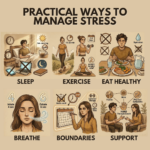
1. Focus on sleep first
Sleep and fatigue are tightly linked. If sleep is disrupted, stress tolerance drops.
- Aim for a consistent wake time, even on weekends.
- Limit caffeine after late morning.
- Reduce screen time 30–60 minutes before bed.
2. Move your body daily
Regular movement lowers stress hormones and improves mood.
- A 10–20 minute walk counts.
- Strength training 2–3 days per week can be helpful.
- Gentle options like yoga or stretching can reduce muscle tension.
3. Use “downshift” breathing
Slow breathing helps calm the nervous system.
- Inhale for 4 seconds
- Exhale for 6 seconds
- Repeat for 2–5 minutes
4. Eat in a way that stabilizes energy
Blood sugar swings can worsen anxiety and irritability.
- Prioritize protein and fiber at meals.
- Avoid skipping meals if it leads to later overeating.
- Stay hydrated, especially if caffeine intake is high.
5. Set one boundary that protects recovery
Small boundaries are often more sustainable than big changes.
- Choose a stop time for work messages.
- Protect one weekly appointment for exercise, therapy, or quiet time.
- Say no to one optional commitment.
6. Get support when stress becomes persistent
If stress is affecting sleep, relationships, work function, or physical symptoms, support can make a meaningful difference. Options include therapy, coaching, and medical evaluation for related conditions such as anxiety, depression, thyroid disease, anemia, or sleep apnea.
When to Seek Medical Care
Consider scheduling a visit if you have:
- New or worsening chest pain, shortness of breath, fainting, or severe palpitations
- Persistent insomnia (more than a few weeks)
- Frequent headaches, stomach symptoms, or fatigue that does not improve
- Ongoing anxiety, panic symptoms, or low mood
These symptoms can be stress-related, but they can also signal medical issues that deserve evaluation.
This content is for general educational purposes only and does not constitute medical advice. Please consult with your healthcare provider for personalized medical guidance.
Call 346-500-5342 to find out how we can help with stress management and overall health.