
What is Heart Disease?
Heart disease refers to a group of conditions that affect the heart’s structure, blood supply, rhythm, or ability to function properly. It is often used interchangeably with cardiovascular disease, a broader term that includes disorders of the heart muscle, valves, arteries, veins, and blood vessels throughout the body. Together, these conditions interfere with the heart’s ability to efficiently pump oxygen-rich blood, which is essential for every organ system to function normally.
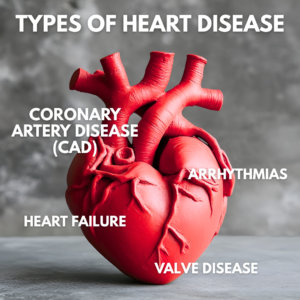
The most common type of heart disease in the United States is Coronary Artery Disease (CAD). CAD occurs when blood flow to the heart muscle is reduced, increasing the risk of a heart attack. Other common forms of heart disease include:
- Arrhythmias: Irregular heart rhythms that may feel like fluttering, racing, or skipped beats
- Heart Failure: A condition in which the heart cannot pump blood efficiently enough to meet the body’s needs
- Valve Disease: Damage or dysfunction of one or more heart valves
Heart disease remains the leading cause of death in the United States, claiming 680,981 lives in 2023. Provisional data from 2024 shows that number remains alarmingly high at over 683,000 deaths. In fact, one in every four deaths in America is due to heart disease.
What makes heart disease especially dangerous is that it is often “silent.” Many people are unaware they have it until a major event occurs, such as a heart attack, heart failure, or a serious arrhythmia. When symptoms do appear, they may include chest pain, shortness of breath, fatigue, or swelling in the legs or neck.
But here’s the most important takeaway: up to 90% of heart disease is preventable. By understanding your risk factors and making small, sustainable lifestyle changes, you can dramatically improve your heart health and reduce your cardiovascular risk.
Ways to Keep Your Heart Healthy
- Eat Better Your plate is your first line of defense. The gold-standard diets for heart health are the DASH (Dietary Approaches to Stop Hypertension) and Mediterranean eating patterns. These focus on whole foods, lean proteins, fruits, vegetables, and healthy fats such as olive oil.
- Be More Active Adults should aim for 150 minutes of moderate activity (like brisk walking) or 75 minutes of vigorous activity each week. Even adding just 10 minutes of movement a day can make a meaningful difference.
- Quit Tobacco Smoking is the leading cause of preventable death in the U.S. and this includes e-cigarettes and vaping, which also damage blood vessels. The good news? Your heart rate begins to drop just 20 minutes after your last cigarette.
- Get Healthy Sleep Recognized as the eighth essential for heart health in 2022, sleep is critical for regulating blood pressure and allowing the body to repair itself. Most adults need 7–9 hours of sleep each night.
- Manage Weight A Body Mass Index (BMI) under 25 is considered optimal. Excess weight places additional strain on the heart and increases the risk of diabetes and high blood pressure.
- Control Cholesterol High levels of “bad” cholesterol can lead to plaque buildup in the arteries. Doctors now often focus on non-HDL cholesterol, which does not require fasting and provides a more complete picture of cardiovascular risk.
- Manage Blood Sugar Chronically elevated blood sugar damages blood vessels, the heart, and the kidneys. If you have diabetes, maintaining healthy hemoglobin A1c levels is key to lowering your risk of heart attack and stroke.
- Manage Blood Pressure Often called the “silent killer,” high blood pressure usually has no symptoms. An optimal blood pressure reading is below 120/80 mmHg.
Call 346-500-5342 to find out how we can help with heart disease prevention and management.