
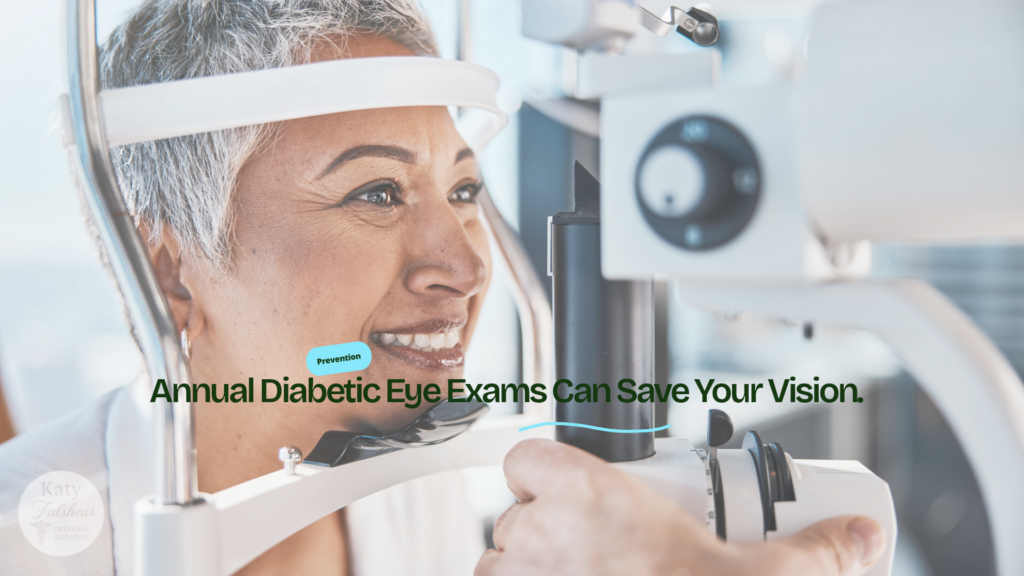
Annual Diabetic Eye Exams: Protecting Your Vision Starts with Prevention
Living with diabetes means taking care of more than just your blood sugar. One of the most important—but often overlooked—parts of diabetes management is protecting your eyesight. An annual diabetic eye exam can detect vision-threatening problems long before you notice any symptoms.
At Katy-Fulshear Internal Medicine, we believe prevention is the best medicine. As your primary care team, we help coordinate every aspect of your diabetes care, including ensuring you receive the recommended yearly eye examination.
Why Does Diabetes Affect Your Eyes?
Diabetes can damage the tiny blood vessels that supply the retina, the light-sensitive tissue at the back of your eye. Over time, high blood sugar can weaken these vessels, causing them to leak fluid or bleed.
This condition is called diabetic retinopathy, and it is one of the leading causes of preventable blindness among adults.
The frightening part?
Many people have no symptoms during the early stages.
By the time blurry vision develops, permanent damage may have already occurred.
What Is a Diabetic Eye Exam?
A diabetic eye exam is a comprehensive examination performed by an eye care specialist.
During the visit, your eyes are dilated with special drops, allowing the doctor to examine your retina for signs of diabetes-related damage.
Your exam may also evaluate for:
- Cataracts
- Glaucoma
- Macular edema
- Retinal bleeding
- Retinal swelling
- Changes in blood vessels
The appointment is painless and usually takes less than an hour.
Who Needs an Annual Diabetic Eye Exam?
The American Diabetes Association (ADA) recommends regular eye exams for everyone with diabetes.
You should have yearly eye exams if you have:
- Type 1 diabetes
- Type 2 diabetes
- Prediabetes with vision changes
- Gestational diabetes (if recommended by your physician)
- Diabetes for many years
- High blood pressure
- High cholesterol
- Kidney disease
Even if your vision seems perfectly normal, retinal damage can still be developing silently.
Signs You Should Never Ignore
Although diabetic eye disease often has no symptoms initially, contact your healthcare provider immediately if you experience:
- Blurred vision
- Floaters
- Dark spots
- Difficulty seeing at night
- Fluctuating vision
- Partial vision loss
- Colors appearing faded
- Sudden vision changes
These symptoms require prompt evaluation.
How Blood Sugar Control Protects Your Eyes
Keeping your diabetes under control significantly lowers the risk of diabetic eye disease.
Important ways to protect your eyesight include:
Maintain Healthy Blood Sugar
Consistently keeping your A1C within your target range reduces damage to retinal blood vessels.
Control Blood Pressure
High blood pressure increases stress on the delicate vessels inside your eyes.
Manage Cholesterol
Elevated cholesterol contributes to blood vessel damage throughout the body, including the retina.
Take Medications as Prescribed
Whether you take insulin or other diabetes medications, following your treatment plan helps reduce complications.
Don’t Skip Annual Exams
Early detection often prevents severe vision loss.
How Your Internal Medicine Physician Helps
Many people think eye exams are only the responsibility of an eye doctor.
In reality, your internal medicine physician plays a critical role by:
- Monitoring your diabetes throughout the year
- Tracking your A1C
- Managing blood pressure and cholesterol
- Coordinating referrals to eye specialists
- Reviewing eye exam results
- Monitoring for diabetes complications
- Encouraging preventive care
Think of your primary care provider as the coordinator of your overall diabetes care.
What Happens If Diabetic Retinopathy Is Found?
Finding diabetic retinopathy early allows treatment before permanent vision loss occurs.
Treatment may include:
- Better blood sugar control
- Blood pressure management
- Eye injections
- Laser therapy
- Surgery for advanced disease
The earlier the condition is detected, the better the chances of preserving your vision.
How Often Should You Have a Diabetic Eye Exam?
Most adults with diabetes should schedule an eye exam once every year.
Your eye doctor may recommend more frequent visits if:
- You already have diabetic retinopathy
- Your blood sugar is poorly controlled
- You’re pregnant
- Your vision changes suddenly
Always follow the schedule recommended by your healthcare providers.
Frequently Asked Questions
If my vision is normal, do I still need an eye exam?
Yes. Early diabetic eye disease often causes no symptoms.
Can diabetic eye disease be reversed?
Early treatment can slow or stop progression. Severe damage may not be reversible, making early detection essential.
Is a diabetic eye exam covered by insurance?
Many insurance plans, including Medicare, cover annual diabetic eye exams for people with diabetes. Check with your insurance provider for your specific benefits.
Is the exam painful?
No. The dilating drops may temporarily blur your vision and increase light sensitivity for a few hours, but the exam itself is painless.
Protect Your Vision—Schedule Your Annual Diabetic Eye Exam
Your eyesight is too valuable to leave to chance.
If you have diabetes, make your annual diabetic eye exam part of your routine preventive care. Regular screenings, good blood sugar control, and coordinated care with your internal medicine physician can help preserve your vision for years to come.
At Katy-Fulshear Internal Medicine, we’re committed to helping our patients prevent diabetes-related complications through comprehensive, personalized care. If you’re due for your annual diabetic eye exam or need help managing your diabetes, our team is here to support you.
Call today to schedule your next diabetes follow-up and stay on track with your preventive health.